













3 Business Marketing Strategies to Win the War on Local SEO
Whether you’re an authentic local business or a franchise looking to appeal to visitors in your area, people always seem to be scared of local SEO. And I must admit, at times, it has baffled me too. However, there are three key things that Google seems to favor when it comes to local business rankings.
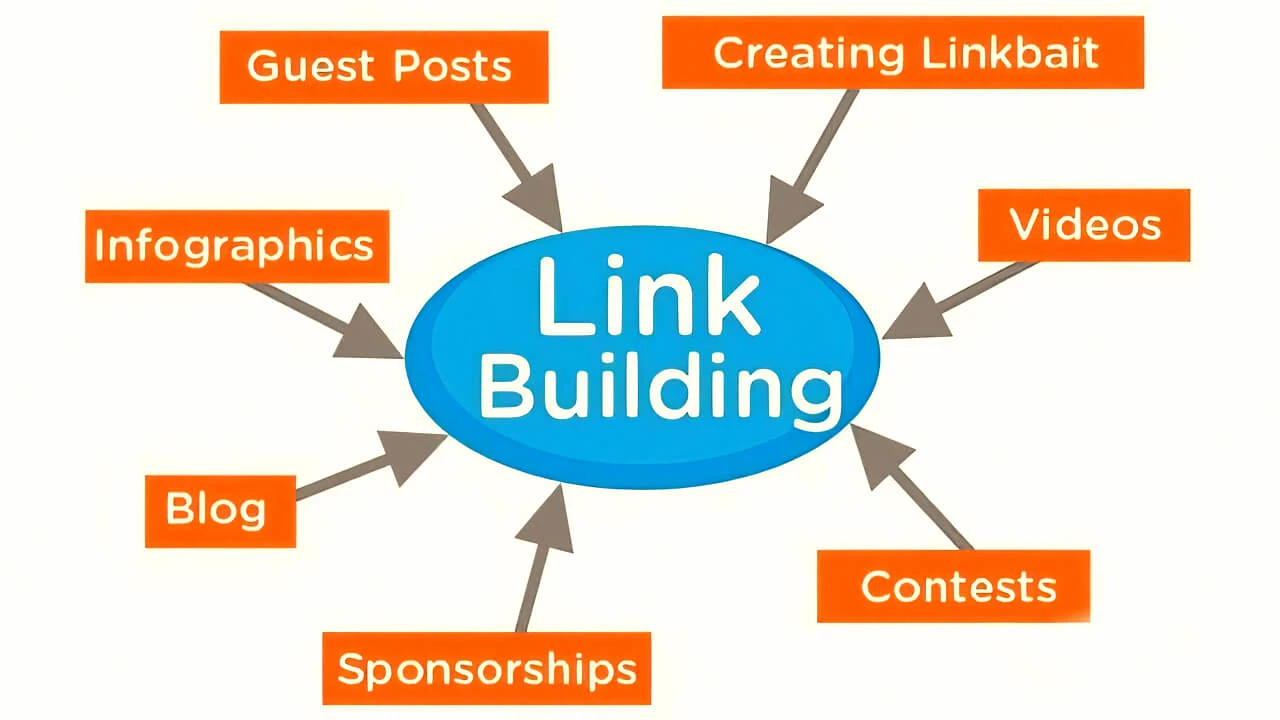
Link Building Tactics That Still Works
The World Wide Web wouldn’t exist without links. In fact, links are why it is referred to as a web – they provide the webbing that eventually interconnects billions of websites into one interconnected web. Every website owner and marketer ought to take link building seriously.
Google Experimenting With 20 Search Results Per Page?
You have always (well for as long as I can remember) been able to select the number of search results shown by Google. The default is 10. Then they add in various other things like news, video, images, local results, etc. Those additions are generally known as universal search.

Digg Favorites Slapped By Google
For a company such as Google with a stock price based extensively on anticipated growth and public sentiment, it doesn’t take a huge swing in goodwill to have a dramatic effect on valuation. Google has just slapped their biggest fans.
After the very controversial hit many sites took just 2 weeks ago for various degrees of selling PageRank or linking to clients, you might have thought Google would take a breather, but Google it seems hadn’t even started its crackdown.
A number of sites have been hit yet again, including this one, but there is also a new element that has been introduced.
So Why A Penalty?
Most people today will be speculating that it is all about paid links, or that it is a massive reshuffle in the PageRank algorithm. Some of the hits were certainly paid link or advertising without nofollow related.
However many of these sites do not fit that pattern, but they do fit another…
Here are the Google guidelines
Don’t participate in link schemes designed to increase your site’s ranking or PageRank. In particular, avoid links to web spammers or “bad neighborhoods” on the web, as your own ranking may be affected adversely by those links.
Many of the reputable sources that have received a penalty are part of extensive blog networks, and they have one factor in common. They have massive interlinking between their network sites.
They may also sell links or advertising that passes PageRank on some of their less visible properties, but those properties benefit from the high pagerank sites that link to them, with sitewide links.
Some of these sites have been known to add or knock millions off of the price of Apple shares in the past, what do you think it is going to do to Google?
Update
The most relevant update I can give you is that Aaron the Technical Director at B5 tends to agree with the idea that this might be related to blog network interlinking, but obviously doesn’t agree with Google’s conclusions that they are doing something wrong.
At b5media, we are weighing how we want to respond to this. Either we give in to Google and let them dictate what we do and have the unenviable position of losing pagerank and possibly advertising dollars, or we take the stand that quality content is quality content regardless of Google and that our content will speak for itself. We still produce millions of pages of content per month. We still have respect in the community. We still have advertisers recognizing that these sites are valuable assets to leverage to get their campaigns out on.
I certainly don’t intend to be whipped by Google for 9 reviews or “public consultation” pieces I have written over the last 12 months, and as I gave the links in an editorial matter of my choosing, I didn’t use Nofollow.
- Not all networks have been given a penalty for interlinking.
- There are splogs and scraper sites out there that are PR5 or higher, monetized with Google Adsense, with traffic coming from Google Adwords
- Gloating “innocent” tech blogs who thank their sponsors each month with free followed links
- Major corporations such as Yahoo who are allowed to sell links
- Other corporations who practice massive internal linking among their network to unrelated sites.
Ultimate List of DoFollow & Nofollow Plugins
Banish Nofollow From Comments and Trackbacks
WordPress by default, just like other blogging platforms, has automatically been adding the “nofollow” microformat extension to all links from user generated content such as comments and trackbacks. To support the growing rejection of NoFollow for blog comments, I have compiled this list of plugins that help you remove nofollow from your blog forever.
Lucia’s Linky Love Plugin– I was going to liken this plugin to a Ferrari because it is built to be fast, but it is probably more like a Subaru, not just fast but designed for rugged terrain and can handle the twists and turns of comment spammers without slowing down.- DoFollow– many looks on this as the granddaddy of NoFollow plugins – you just switch it on, and it works, all nofollows are removed from comments and trackbacks.
Dofollow (WP Plugin)– Sometimes I wish this one has been given a better more descriptive name. It includes the ability (optional) to remove nofollow from comments after a period of time.Link Love– this is a brand new plugin that removes nofollow after a certain number of comments have been made – this rewards regular commenters – one thing I like is that the detection is based upon email address and not domain or URL, so it allows a commenter to spread the links how they like.GoodLinks– This plugin looks extremely useful for many people who have layout problems when people post long URLs – it also removes NoFollow as an optionBlank Target Comments– Another multi-purpose comment link plugin – it removes nofollow from only the comment author links, and adds target=”_blank” – no link because it doesn’t seem to be available for download anymore which is a shame.Remove Nofollow– Cristian Mezi from SeoPedia’s plugin – I am not sure of the history or features, but it is probably similar to the original DoFollow plugin.NoNofollow– Including this link for historical reasons – Bronski’s plugin doesn’t work with newer versions of WordPress, but credit where credit is due.WP-Nofollow– Again included for historical reasons – one of the first plugins for WP 1.2 based on the original MT plugin code.
For those that like hacking core files Rob has a simple guide to removing nofollow, though I prefer to avoid hacking any core files as it makes keeping WordPress up to date easier.
How to Remove Nofollow From Blogger / Blogspot
New Blogger Blogspot – Here is a guide on how to remove nofollow from your Blogspot blog using New Blogger for both comments and trackbacks.
How to Remove Nofollow From Typepad
Mike Sansone created a simple step-by-step guide on How To Remove Nofollow From Typepad.
Fox Tucker has also come up with an interesting way to present links without nofollow on Typepad blogs.
How to Remove Nofollow From Moveable Type
How to remove Nofollow on Moveable Type – A Comprehensive guide to removing Nofollow from Moveable Type and Disable the Redirect.
This also referenced Removing the Redirect Link
Legacy link for Moveable Type and Nofollow (it wasn’t complete)
Some Plugins Not Included?
I did find a few other Nofollow plugins available, but they appear on sites that are using nofollow for links in their own comments, seemed to be copies of the same code others provided, or were just dead links, so I didn’t include them here.
Add Nofollow
If you want to do the opposite, and add NoFollow to certain types of links, here are some resources. There are some great and totally legitimate reasons you might want to do this.
Add Link Attribute– this plugin is incredibly powerful in the hands of someone who intends to control the flow of Google Juice around their site. Some links are purely navigational, or link to forms or other pages both on or off site that do not contain content. This plugin allows you to zap them without modifying core files.- Wikipedia NoFollow– want to reclaim the Google Juice you send to Wikipedia that currently stops flowing, and turns Wikipedia into a black hole – this plugin is the perfect answer – if Wikipedia becomes the flow back on, you can reciprocate just by switching the plugin off.
WP Temp Nofollow– I am not sure how up to date this one is, but if you have hacked WordPress to remove the nofollow code, you could use something like this plugin to add nofollow back for a period of time. It was designed for older WordPress versions that didn’t have nofollow as standard.- NoFollow from Home– This one is interesting from an SEO perspective in that it adds nofollow to links in your content on the home page
- Don’t Follow– This plugin allows you to selectively add nofollow to links in your comments simply by adding /don’t-follow to the end of the URL – I am not sure how nicely it plays with other nofollow plugins as I would assume it would have to have a lower priority so that it adds nofollow after any other plugin has removed it.
- Nofollow Those Dupes– My own plugin to add nofollow to links within content to everything other than single pages, thus avoiding Google Juice leaks on duplicate content pages.
NoFollow Community on Bumpzee
A list of 10000+ sites that are supporting the no nofollow | dofollow | I follow movement isn’t a viable proposition. In fact, there are 149,000 references to DoFollow listed by Google, though not all of those sites are using a dofollow solution, or have the ability for users to leave a comment or trackback.
For some months I thought about creating a directory of DoFollow supporters, and even have a prototype site with loads of features, but it just didn’t offer enough usability, and managing the growing community would have been extremely time-consuming.
My solution (I did consider many) was to create a community that allowed no nofollow community members to find bloggers that were like minded within their own niche.
Bumpzee has support for tagging, parsing tags and defined categories from within the RSS feeds. Thus it is possible to browse blog posts on any subject.
The interface isn’t ideal yet, but is under constant active development, and hopefully, in the future you will be able to just go to a tag on parenting, and find 50 or more blogs who write about parenting, and their recent posts, and who all use a dofollow equivalent for their blogging platform.